How Chicago’s Nightlife Demographics Are Changing Party Bus Demand (2026 Ultimate Guide)
By Chitown Party Bus
Updated: January 2026
Chicago Party Bus, Group Transportation & Nightlife Logistics Experts
Introduction — Why This Matters Now
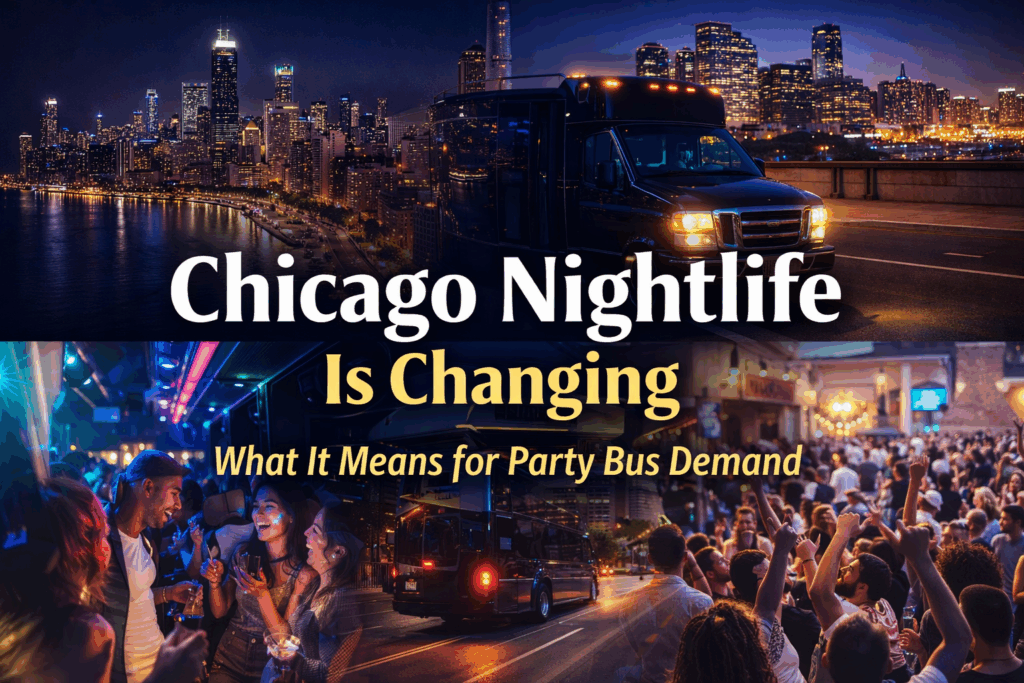
chicago nightlife demographics – Chicago’s nightlife scene has been evolving — fast and in ways that change how people book transportation for nights out. What used to be dominated by late-night bar and club hopping is now blending with new social patterns — daytime events, sober socials, community-centric gatherings, and diverse cultural celebrations.
For a party bus company like Chitown Party Bus, understanding who is going out, when they go out, and how they want to experience Chicago’s night is essential for planning routes, pricing, marketing, and services.
This guide breaks down:
-
How Chicago’s nightlife demographics are changing
-
How those changes influence party-bus demand
-
What groups now look for — and how you can plan around it
-
Practical strategies to align party-bus services with evolving behaviors
We’re not guessing — we’re analyzing trends that influence how people move in Chicago’s social nightlife ecosystem. chicago nightlife demographics
Part 1 — Demographic Shifts in Chicago Nightlife
1. Younger Adults (Gen Z) Bringing New Social Patterns
Recent cultural reporting indicates that younger Chicagoans — especially Gen Z — are shifting away from traditional alcohol-centric nightlife and embracing “soft clubbing” and alternative social gatherings. These events favor daytime activity, intentional connection, and experiences over heavy drinking.
📌 Soft clubbing, for example, is described as dance-focused sessions in daytime venues such as cafés and community spaces, rather than after-hours alcohol-heavy nightclub scenes.
Why this matters for party buses
-
Demand increasingly comes outside traditional midnight–2 AM windows
-
Downtown nightlife patterns can begin as early as afternoon–evening social events
-
Daytime group transport becomes strategic, not just nighttime
This shift changes planning patterns — your routes, scheduling, and service strategy must match when people are actually socializing. chicago nightlife demographics
2. Broader Cultural & Community Nightlife (Daytime + Early Evening)
Chicago’s nightlife is no longer limited to bars and clubs. Events like Cafetón, a large reggaeton coffee-party gathering that attracted thousands, are examples of music-driven daytime social movement that blend cultural celebration with community engagement.
Groups today seek:
-
Community-centric social experiences
-
Daytime and early evening dance parties
-
Activities that don’t depend on traditional club environments
This trend expands the demand window for party bus service — which now includes daytime or afternoon pickup + scaling to nightlife.
3. Diverse Chicago Hotspots & Subcultural Districts
Chicago’s nightlife isn’t homogeneous; it’s spread across neighborhood clusters with unique demographic flavors:
-
Boystown & Northalsted — historically significant LGBTQ+ nightlife hub with unique event demand.
-
Rush Street / River North — traditional party and adult nightlife destinations.
-
Wicker Park / Logan Square — youthful and arts-oriented social scenes
-
West Loop / Fulton Market — emerging day-to-night entertainment districts
Mapping party-bus demand by demographic and neighborhood is now a logistics priority, not just a marketing idea. chicago nightlife demographics
Part 2 — Concrete Ways Demographics Shift Party Bus Demand
This section turns trends into operational realities for planning and selling party bus services.
1. Time Windows Have Shifted
Nightlife is no longer only late at night.
| Audience Segment | Social Window | Implication for Party Bus |
|---|---|---|
| Traditional club crowd | 10 PM — 3 AM | Late-night routing |
| Gen Z experiential crowd | 3 PM — 11 PM | Daytime + early pickup |
| Music event groups | Variable | Flexible windows |
| Cultural community events | Afternoon to early night | Pre-night planning needed |
Actionable Insight: Build service options for early start + late finish — not just late night. chicago nightlife demographics
2. Spatial Demand Is Polycentric
Instead of one centralized nightlife district, demand is split across multiple hubs:
-
Downtown/River North
Also Read: LIRR Strike 2026: Best Transportation from Long Island to NYC
-
Wrigleyville
-
West Loop
-
Boystown / LGBTQ+ spaces
-
Daytime cultural event sites
Actionable Insight: Plan multi-stop routes that recognize transitions between these areas rather than dead-end circuits. chicago nightlife demographics
3. Group Social Behavior Is More Intentional
Younger cohorts seek curated experiences — not just transportation.
They want:
-
Branded experiences tied to events
-
Storytelling elements (e.g., photo ops, playlists)
-
Digital coordination (route notifications, group tracking)
Actionable Insight: Embed event coordination into service descriptions — not just transportation details. chicago nightlife demographics
Part 3 — Demand Signals That Impact Party Bus Provider Strategy
1. Longer, Multi-Segment Nights
Party buses now support:
-
Afternoon social starts
-
Dinner + cultural events
-
Night clubbing
-
Early next-day brunch transitions
Your planning needs to reflect complete social itineraries. chicago nightlife demographics
2. Safety & Coordination Preferences
As nightlife experiences diversify — including earlier events — group safety becomes more important:
-
Groups prefer staying together (no splitting Uber/Lyfts)
-
Predictable pickup windows are valued
-
Professional drivers are part of the experience, not just the ride
This makes party buses more appealing than traditional ride-sharing in many cases.
chicago nightlife demographics
3. Price Sensitivity + Value Tiering
Market research on party-bus pricing shows typical hourly ranges from $100 to $350 per hour, with mid-range buses most popular for group entertainment.
Actionable Insight: Tier pricing to match behavior segments:
-
Daytime cultural follow-ups vs.
-
Traditional late-night social circuits
This maximizes revenue and meets real usage patterns.
Part 4 — Scripts & Practical Planning Frameworks
Here are ready-made planning scripts — like those in your other blogs — adapted to demographic shifts.
Arrival / Pre-Night Script
“We’re kicking off our group experience at ___. Pickup is at ___ at ___ PM (earlier because people start socializing before night). If the venue is crowded, fallback pick-up is ___ block away.”
Multi-Stop Night Script
“We move from early event ___ to dinner at ___ then nightlife hub ___. Pickups are set every 45 minutes with fallback staging at side streets to avoid congestion.”
Weather / Timing Adjustment
“The forecast shows rain later. We push our departure earlier by 20 minutes, and staging is under covered area ___.”
These formats pre-block common delays and reflect when people are now out — not just late night.
chicago nightlife demographics
Part 5 — FAQs Based on Demographic Nightlife Trends
Q: Is traditional nightlife declining in Chicago?
Not declining — evolving. New formats (daytime social, community dance events) are simply adding to the mix.
Q: Are younger groups less interested in party buses?
No — they want experience-driven journeys tied to events and culture.
Q: Do party buses need to start earlier now?
Yes — to meet demand for daytime or early evening social events, not just 11 PM nightlife.
Q: Should party bus pricing reflect time shifts?
Yes — tiered prices for daytime + nighttime experiences keep services aligned with usage.
Part 6 — Best Practices for Party Bus Demand Growth in Chicago (2026)
1. Data-Driven Scheduling
Use past booking data + local event calendars to anticipate demand windows, not just “peak nightlife hours”.
2. Cultural Event Partnerships
Events like daytime music parties or community gatherings often require group transport — plan targeted promotions.
3. Neighborhood Mapping
Different areas generate different group sizes and behaviours — tailor routes accordingly.
4. Flexible Itineraries
Allow clients to book package bundles (e.g., afternoon event + nightlife crawl + brunch pickup).
5. Digital Contact & Real-Time Coordination
Since social patterns are less predictable, build dynamic communication systems (texts, driver updates, fallback messages).
Conclusion — Demand Is Not Decreasing, It’s Evolving
Chicago nightlife is no longer one thing — it’s multiple rhythms across the day and night. Demographics are shifting how people socialize, and that directly changes how group transport is planned.
At Chitown Party Bus, our goal is to not just move people — but to anticipate when, where, and why they travel together. That’s the difference between a ride and an experience on wheels.
If you want help planning routes, timing frameworks, or creating targeted events for your next nightlife outing, we have solutions ready — just book consultation with our planning team.
Also Read: Inter Miami vs Cincinnati 2026 Transportation Guide